Mirror Paintings |
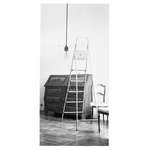
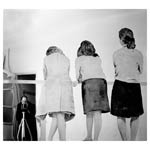
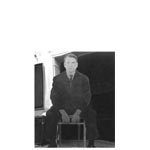
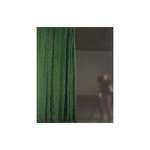
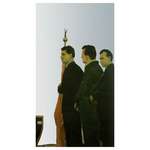
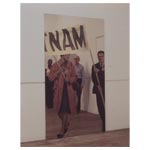
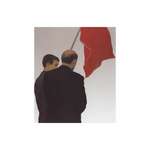
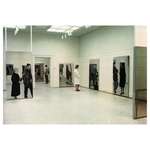
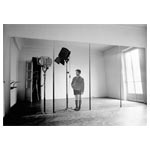
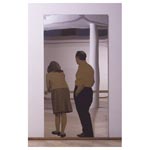
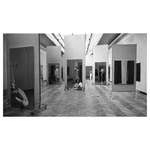
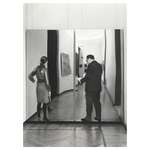
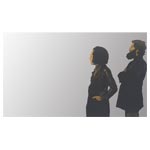
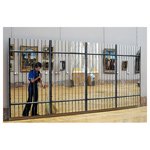
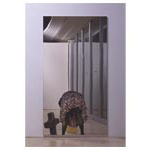
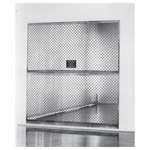
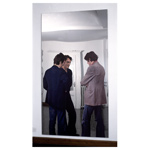
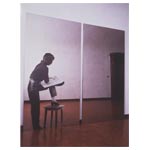
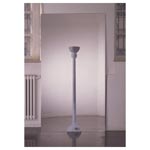
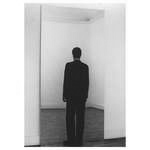
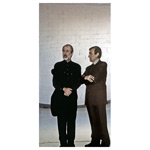
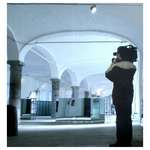
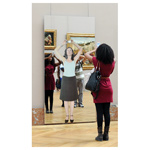
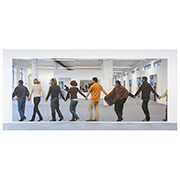
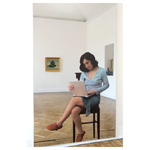
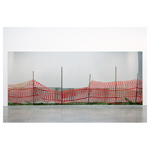
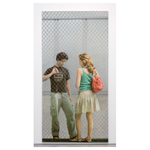
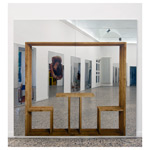
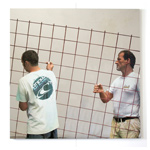
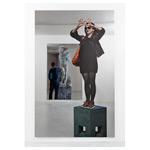
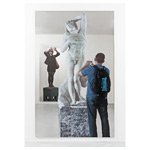
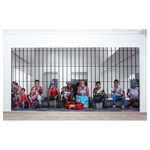
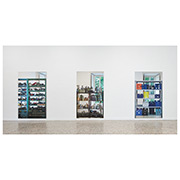
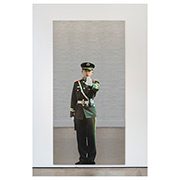
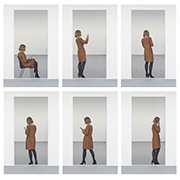
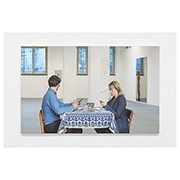
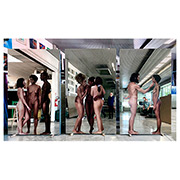
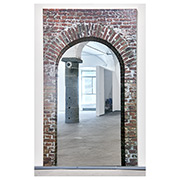
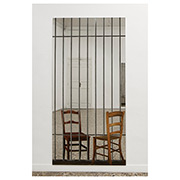
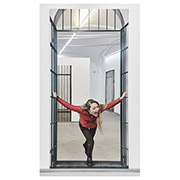
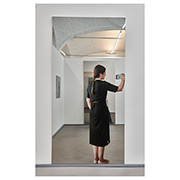
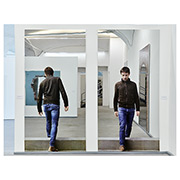
Immediately afterward he carried out a series of experiments aimed at attaining as high a degree as possible of the objectivity he had seen in the pictures with a black ground. He tried using a variety of materials to make the background more reflective, including aluminum sheets which he applied to the canvas, as in Grey Man from Behind [Uomo grigio di schiena] (1961). Finally he found in stainless steel polished to a mirror finish the material best suited to obtaining this effect. To give the maximum of objectivity to the figure portrayed as well, he decided to make use of photography. At first he tried to apply a cutout of the photographic image directly onto the sheet of steel, a solution that he rejected because in that way the photograph would have created the impression of an object that had been inserted, in contrast with the immateriality of the reflected image. He also tried using an ordinary mirror as a support for the photograph, but had to reject this solution too because the thickness of the glass that covered the reflective surface of the mirror would have resulted in a mismatch between the plane of the reflected image and that of the photographic image. Eventually he developed the technique which he would use to produce his Mirror Paintings [Quadri specchianti]: a sheet of stainless steel polished to a mirror finish, onto which he applied an image made by tracing a photograph blown up to life size on flimsy paper. In 1971 he started to replace the painted paper with a silkscreen process in which the original photograph was transferred directly onto the sheet of reflective steel, and by 1973 this had become the definitive technique. The Mirror Paintings constitute the foundation of Pistoletto’s work, the basis of both his subsequent research and artistic production and his theoretical reflection, where he has constantly returned to them in order to probe their significance more deeply and develop their implications. The essential characteristics of the Mirror Paintings, the ones that the artist himself identifies in them, are: the dimension of time, not just represented, but really active; the inclusion in the work of the observer and the surroundings, which make it a “self-portrait of the world”; the meeting of opposite poles (static/dynamic, surface/depth, absolute/relative, etc.), brought into play by the interaction between the image of photographic origin and what is going on in the virtual space generated by the reflective surface; and the fact of no longer being an illusory window open onto the world, as in the conception of the picture that emerged with Renaissance perspective and reached its conclusion with the historic avant-gardes of the 20th century. Unlike this perspective, directed exclusively forward, the mirror painting now offered a twofold perspective, showing both what is in front and what is behind us and thus creating an opening through which the setting in which it is displayed extends into the virtual space of the work, a door connecting art and life. |
click
on the thumbnails to enlarge |
||
|
||
|
||
|
||
|
||
|
||
|
||
|
||
|
||
|
||
|
||
|
||
|
||
|
||
|
||
|
||
|
||
|
||
|
||
|
||
|
||
|
||
|
||
|
||
|
||
|
||
|
||
|
||
|
||
|
||
|
||
|
||
|
||
|
||
|
||
|
||
|
||
|
||
|
||
|
||
|
||
|
||
|
||
|
||
|
||
|
||
|
||
|
||
|
||
|
||
|
||
|
||
|
||
|
||
|
||
|
||
|
||
|
||
|
||
|
||
|
||
|